
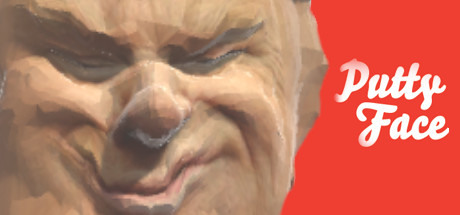

From Silly Putty to modeling clay, physical sculpting materials have always captivated us because they offer immediate, tactile cause-and-effect. You pinch an edge, knead a curve, or mash a palm against a soft lump, and the material instantly registers the force of your hands. Yet when 3D digital art transitioned to virtual reality, many early applications leaned heavily into professional, high-density CAD paradigms. Software packages like Oculus Medium or Masterpiece Studio were brilliant for seasoned digital sculptors, but their complex menu hierarchies, multi-layered brush palettes, and steep voxel learning curves often overwhelmed players looking for simple, intuitive fun.
Indie developer the3dCrew stripped away that technical friction entirely with Puttyface (Steam App ID: 606350), a delightfully chaotic and tactile VR physics toy available completely free on PC via SteamVR.
Puttyface dispenses with intricate toolbars and precision sculpting brushes. Instead, it places a collection of responsive, malleable 3D heads and cartoon faces floating directly in front of the player's headset. Equipped with tracked motion controllers, players can grab, pinch, stretch, smash, morph, and swoosh these digital busts in real time, exploring the pure kinetic joy of elastic mesh distortion.
Launched as an approachable free-to-play sandbox, Puttyface embraces the lighthearted, surreal potential of spatial computing.
Impression Badges
| Badge Category | Assigned Badge | What It Signifies |
|---|---|---|
| Core Genre | VR Sandbox & Creative Toy | An unpretentious, immediate physics sandbox focused on tactile digital play. |
| Monetization Policy | Free to Play | Completely free Early Access release with no microtransactions or locked tools. |
| Mesh Interaction | Real-Time Soft-Body Deformation | Dynamic vertex manipulation modeling squishy, elastic, and malleable clay surfaces. |
| Input Fidelity | Haptic Vertex Manipulation | Responsive controller grip triggers mapped to directional pull, pinch, and push vectors. |
| Visual Tone | Whimsical Character Morphing | Exaggerated caricature heads designed for comedic distortion and playful deformation. |
| Accessibility Standard | Low-Barrier Spatial Play | Zero menus or complex keybindings required; instantly playable for all ages. |
The Physics of Digital Squish: Real-Time Vertex Manipulation
At the center of Puttyface is its real-time mesh deformation pipeline. Traditional polygonal meshes in video games are rigid structures, deformed only along pre-skinned skeletal joints or pre-baked blend shapes. Creating convincing soft-body putty requires dynamic, per-vertex spatial calculation that reacts smoothly to continuous controller coordinates:
- Proximity Grabbing and Displacement: When the player brings a motion controller near the surface of a face and depresses the trigger, the game calculates a localized radius of influence. Pulling the controller outward elongates the surface into an exaggerated rubbery snout; pressing inward pushes the facial geometry back like soft dough.
- Volume and Tension Balancing: The mesh simulation incorporates basic elastic resistance. Stretched features thin out appropriately before reaching their displacement thresholds, giving the virtual putty a sense of physical weight and cohesion rather than feeling like hollow, unweighted wireframe geometry.
- Smoothing and Re-Shaping: By utilizing dual-hand gestures, players can grasp opposing cheeks, twist ears into corkscrews, or smooth out bulbous foreheads, creating bizarre caricatures or restoring distorted heads back toward their original silhouettes.
The tactile sensation is heightened by subtle haptic feedback pulses delivered through the controller grips. As your hands sink into the digital clay or snap an elastic tendril back against a cheek, the subtle rumble reinforces the illusion of physical matter.
Cartoon Catharsis: Smashing, Stretching, and Swooshing
While professional sculpting applications demand patience, anatomical precision, and meticulous symmetry, Puttyface celebrates joyful, slapstick destruction. The game encourages players to treat its floating heads like rubber stress toys:
- The Joy of Slapstick Distortion: Nothing is precious here. You can yank an eye out on an absurdly long stalk, flatten a nose like a pancake with a swift open-handed swat, or pull a jawline down to the player's knees to craft a howling gargoyle.
- Kinetic Inertia and Swooshing: Moving distorted heads through the air imparts momentum to their elongated features. Flapping ears wobble, drooping chins jiggle with inertia, and sweeping gestures send malleable tendrils swooshing through virtual space.
- Low-Stress Expression: Because there are no failure states, timers, health bars, or grading metrics, the application serves as a therapeutic spatial sandbox. It is an ideal decompression title after high-stress gaming sessions or a hilarious party piece to pass around to friends trying virtual reality for the first time.
The developer's design philosophy prioritizes pure amusement over technical pretension, creating an atmosphere where players of any age or artistic skill can immediately giggle at their own creations.
Accessibility and Headset Ergonomics
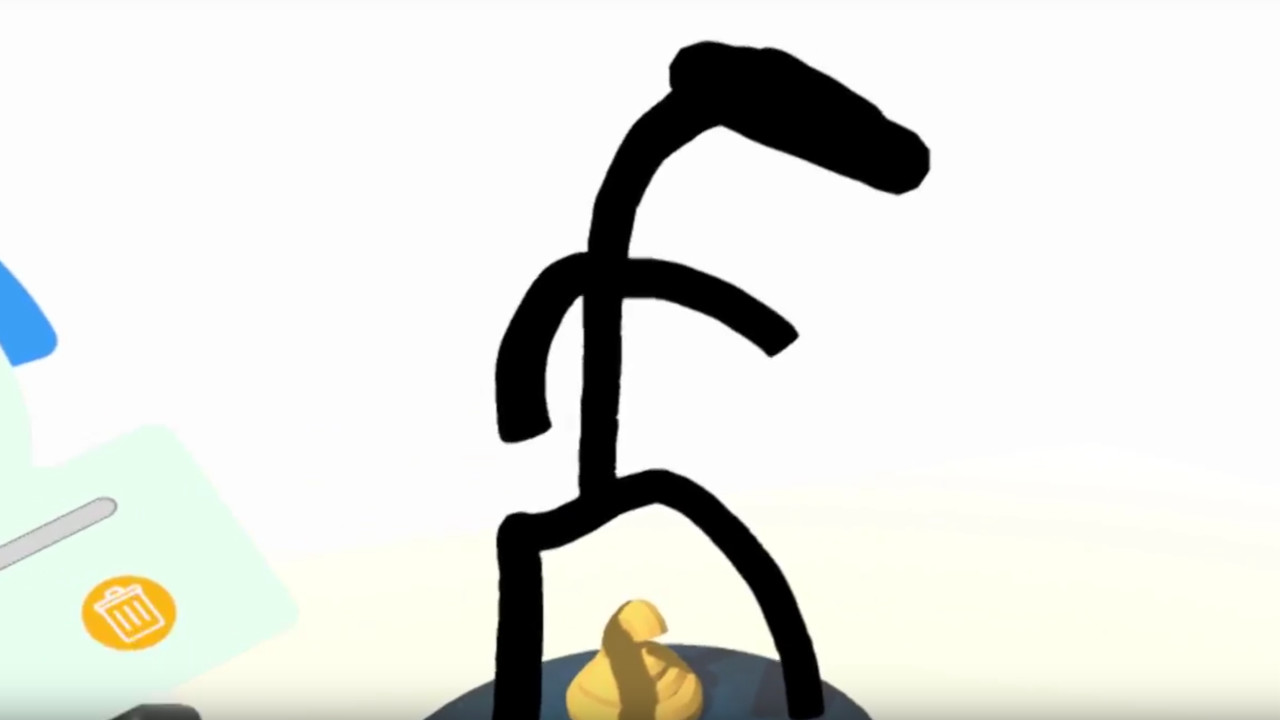
One of the quiet triumphs of Puttyface is its restraint in interface design. In an era where many VR experiences burden users with floating laser-pointer menus, radial dials, and multi-button combos, the3dCrew opted for direct physical interaction:
- Zero-Instruction Onboarding: A player put into the headset needs no tutorial card. The natural impulse upon seeing a floating cartoon face within arm's reach is to reach out and touch it. The moment their virtual hand touches the surface and the mesh yields, the gameplay loop is entirely understood.
- Comfort-First Interaction: By positioning the interactive busts directly within the user's natural ergonomic comfort box, the game eliminates any need for artificial locomotion, smooth turning, or teleportation. Players can play seated or standing without encountering motion sickness or spatial disorientation.
- Performance Stability: The optimized mesh processing ensures fluid 90-frame-per-second tracking on modest PCVR hardware, ensuring that fast, sweeping controller swings never suffer from frame drops or tracking hitches.
Our Impression
Puttyface is a charming reminder that virtual reality does not always need to simulate massive open worlds or complex tactical combat to justify its existence. Sometimes, the most rewarding experiences in a headset are the ones that simply invite us to play with our hands again.
Developer the3dCrew built a fun, buoyant, and entirely free spatial toy that celebrates the tactile weirdness of real-time 3D deformation. Whether you want to mold goofy cartoon monsters or simply spend ten minutes smashing virtual dough to blow off steam, Puttyface delivers honest, uncomplicated entertainment.
- Developer: the3dCrew
- Publisher: the3dCrew
- Steam Store Page: Puttyface on Steam
- Steam App ID:
606350 - Release Status: Free to Play (Early Access Available Now)
- Price: 100% Free