
The social deduction boom demonstrated how effectively hidden roles and psychological paranoia can transform modest party games into intense verbal standoffs. Yet many deduction titles suffer from a common limitation: when players are not actively debating in meeting phases, their gameplay is reduced to trivial mini-games that carry little genuine survival weight. On the opposite side of the spectrum, hardcore wilderness survival games feature deep crafting trees and grueling environmental pressures, but often lack the sharp interpersonal drama that emerges when team loyalties cannot be trusted.
Indie development team much2pro4you (collaborating with designers Desard and Aristarotoch) fuses these two genres into an unforgiving hybrid with Seven Sins - Academic Version (Steam App ID: 953000), published by MediaCube Games.
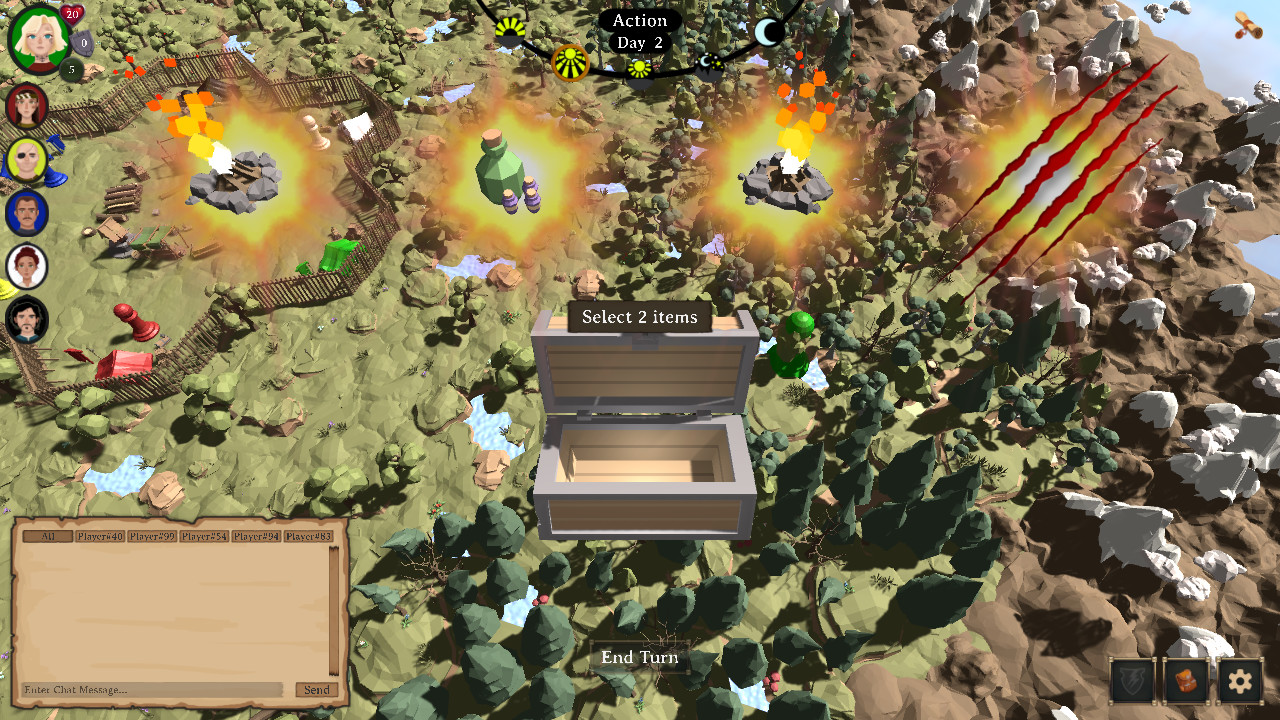
Set in a merciless, predator-stalked wilderness, Seven Sins - Academic Version drops groups of four to six online players into a desperate struggle for daily existence. To withstand the freezing elements, ravenous wildlife, and starvation, players must clear lumber, build camp structures, share resources, and forage far from safety. Yet woven into this cooperative ordeal is a toxic thread of mortal betrayal: each player may secretly harbor the corrupt taint of one of the seven deadly sins, driving them to pursue private, subversive objectives that can shatter the expedition from within.
Impression Badges
| Badge Category | Assigned Badge | What It Signifies |
|---|---|---|
| Core Genre | Survival Social Deduction | Brutal environmental survival combined with asymmetric secret traitor roles. |
| Lobby Dynamic | 4-6 Player Co-op & Betrayal | Tight multiplayer teams forced to cooperate while scrutinizing teammates for treachery. |
| Camp Mechanics | Base Building & Resource Scarcity | Constructing camp structures, gathering lumber, maintaining fires, and managing food reserves. |
| Role Architecture | Hidden Sins Traitor Mechanics | Asymmetric individual win conditions assigned through the biblical seven deadly sins. |
| Environmental Peril | Hostile Wilderness Ecosystem | Deadly wildlife encounters (bears, wolves), sub-zero night cycles, and escalating attrition. |
| Covert Action | Sabotage & Stealth Crafting | Secretly crafting daggers and flintlocks, setting demolition charges, and poisoning supplies. |
The Camp Fire and the Long Night: Cooperative Survival Foundations
Survival in Seven Sins - Academic Version is not a decorative backdrop; it is an unforgiving mechanical gate that requires strict coordination:
- Resource Depletion: The surrounding forest provides the raw necessities of life: timber for fortifications, stone for hearths, clean water, and wild game for meat. As the days advance, local resources are stripped clean, forcing players to venture deeper into unexplored territory where the rewards are greater but the dangers multiply.
- The Terror of Nightfall: Daylight is short and precious. When the sun dips below the tree line, temperatures plummet to freezing levels, and nocturnal predators emerge. Players caught outside the warmth of the camp fire face hypothermia and ferocious apex beasts like grizzly bears that can tear an isolated survivor to shreds in seconds.
- Camp Infrastructure: To increase survival odds, the team must construct functional buildings: smokehouses to cure meat, tool benches to sharpen axes, infirmaries to treat bleeding wounds, and palisade walls to repel nocturnal incursions.
Because no single player possesses enough stamina or inventory capacity to gather, build, and defend alone, cooperation is mathematically mandatory. Even a corrupted traitor cannot survive the wilderness without relying on their innocent teammates during the opening days.
The Taint of Sin: Asymmetric Objectives and Secret Motives
The psychological genius of the game lies in how it distributes its traitor mechanics. Rather than simply assigning one player to kill everyone else, Seven Sins - Academic Version uses the seven deadly sins to craft nuanced, conflicting motivations:
- Greed: Driven to hoard the camp's most valuable crafting materials, lockboxes, and ammunition for themselves, leaving the common storehouse bare when emergency repairs are needed.
- Gluttony: Consumes double food rations, quietly pilfering preserved rations from the larder while teammates starve on meager foraging scraps.
- Wrath: Gains bonus strength and combat advantages when spilling survivor blood, looking for opportunities to finish off wounded teammates under the guise of an unfortunate hunting mishap.
- Envy: Cannot permit other players to construct high-tier equipment or lead the expedition, compelling them to dismantle peer achievements and sabotage prominent structures.
- Pride, Lust, and Sloth: Each introduce distinct behavioral quirks, resource penalties, and private victory requirements that force the afflicted player to deviate from optimal team play.
Because a player's assigned sin may not require total annihilation of the team, players must constantly analyze subtle resource discrepancies: Did that player truly fail to find dry firewood on their scouting run, or are they stockpiling tinder in a secret cache? Did the grizzly bear genuinely ambush our hunter, or was the victim intentionally lured into an animal den?
Covert Sabotage: Daggers, Explosives, and Stealth Crafting
When words fail and distrust boils over, Seven Sins - Academic Version provides traitors with a deadly arsenal of stealth mechanics:
- Concealed Crafting: While honest survivors use workbenches to fashion pickaxes and cooking pots, corrupted players can use specialized blueprints to craft silent hunting daggers, poison extracts from toxic mushrooms, or rudimentary black-powder pistols.
- Structural Sabotage: Placing explosive charges against the support beams of the camp storehouse or starting a fire in the sleeping quarters during a blinding snowstorm can wipe out hours of collective labor in an instant.
- Vigilante Justice: Because there are no automated voting screens or guaranteed expulsion meetings, accusations must be resolved through direct player confrontation. If the camp decides a member is a traitor, they must physically execute them or exile them into the freezing forest, risking the terrifying possibility that they just banished an innocent provider while the real monster sits beside the fire.
Our Impression
Seven Sins - Academic Version provides a much-needed injection of genuine survival stakes into the social deduction genre. By ensuring that nature itself is already trying to kill you at every second, the game makes the emergence of human malice feel exponentially more terrifying.
For gaming groups that relish high-stress social dynamics, tactical base management, and the paranoid tension of wondering who in your expedition has sold their soul to survive, Seven Sins - Academic Version is a gripping title to keep on your radar.
- Developer: much2pro4you, Desard, Aristarotoch
- Publisher: MediaCube Games
- Steam Store Page: Seven Sins - Academic Version on Steam
- Steam App ID:
953000 - Release Status: Upcoming
- Price: Free to Play